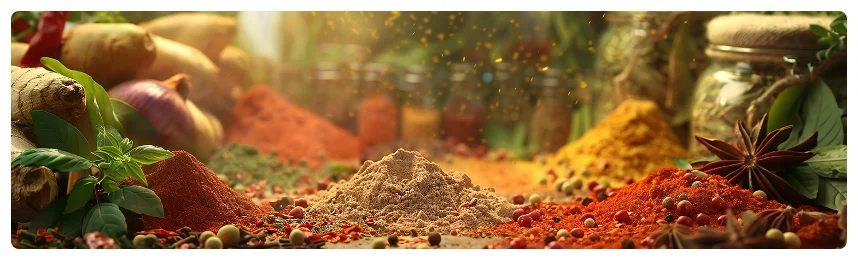

Food in India doesn't feel planned. It feels more like something that evolved in real time, shaped by habit and temperature. Two kitchens can follow the same name for a dish and still produce completely different results, not because someone is wrong but because “correct” is flexible here in a way that doesn’t usually get written down.
Ask a Tamilian and a Punjabi to name India's greatest dish, and the answer won’t match either. That's not confusion; that's just the country working the way it always has. No single plate was ever built to represent the whole nation. Try to compress the famous foods of India into one ranked list, and you may fail. So, book your next flight to India with HolidayBreakz and get ready to experience something more unique and more yummy in every bite.
The Habit Behind Every Kitchen
Indian kitchens aren't tied together by one dish. They're tied together by a habit. You'll hear how the dishes are cooked before you see them: mustard seeds hitting hot oil and curry leaves thrown in right as they start to crackle. That sound isn't garish. It's doing real work underneath the dish. People hunting for famous Indian food as if there's one master recipe waiting to be uncovered are looking in the wrong place entirely. There's a technique instead, reused a hundred different ways between Kashmir and Kerala. Same spice but completely different result because it depends entirely on where you happen to be standing.
The Streets Rarely Wait for Reservations
Some of India's best Indian cuisine was never meant for a fancy table. They belong to busy sidewalks where customers measure freshness by watching each serving assembled in front of them. Timing matters here almost as much as seasoning. Wait too long and the experience changes completely.
Why the North Cooks Rich
As you travel north, food gets richer and heavier. Cold winters push cooking that way. Tomatoes simmer down slowly until they turn soft and deep red. Butter and cream stir in until everything shifts to a warm orange tone. The chicken still holds a bit of smoky flavor. This dish remains the most recognized piece of traditional Indian food anywhere on earth, even though the version made outside India usually comes out far milder than what's actually cooked at home.
Rogan Josh:
Rogan Josh doesn't try to steal the spotlight by being one of the most Indian famous food. It appears like something that has already finished half its work before reaching you. The color is the first detail that settles in. Not bright, not dull, but deep enough to feel like it has absorbed time. The meat inside doesn’t hold its shape for long once touched. It breaks without resistance, not because it is overcooked, but because it has stopped needing structure. What stands out is how spices behave here. They don’t compete. They quietly take turns, staying tucked in the background.
Masala Dosa:
A masala dosa usually gets noticed through sound before anything else. The crispness is not visual at first, but it’s audible. The moment a spoon touches it, there is a light fracture, almost like dry paper breaking cleanly rather than bending. Inside, the potato filling behaves like something that was never meant to be uniform. It has soft patches, small bursts of mustard seed, and warmth spread through every bite.
Pani Puri:
Pani puri doesn’t behave like a meal. It behaves like a sequence of short interruptions. Each piece only lasts a couple of seconds. There's no easygoing way to eat it. You have to eat it fast, right then and there. First comes the crack of the shell splitting open. Then everything else lands at once: crunch, filling, spicy water, and cold, all together in a single bite. The spicy water tastes separately from stall to stall. It carries mint, tamarind, spice, and sometimes an unexpected touch of salt. Even the exact same stall never makes it taste identical twice. People rarely describe the actual taste. They mostly describe how fast it disappears.
Paneer Tikka:
Paneer tikka carries a quiet confidence that doesn’t rely on meat to feel complete. It relies instead on texture that holds its shape under heat, something many ingredients fail to do. The paneer doesn't melt or crumble away. It stays firm all the way through. That firmness is a big reason people love it. The outside picks up a light char, uneven every time, so no two pieces ever look the same. Vegetables beside it don’t act as decoration. They absorb heat differently, which means onions soften into sweetness while peppers hold a slight bite. The plate ends up with multiple textures that don’t merge completely, even when eaten together.
Dal Makhani:
Dal makhani is a must try food in India, as it feels like it was never meant to be eaten up fast. It feels like time itself is baked right into the ingredient list. The lentils break down slowly, hour after hour, until the whole pot turns thick and soft. Butter changes the dish quietly, without ever making it feel too heavy. It spreads through everything evenly, never in big clumps, almost like it doesn't want to be noticed on its own. What stands out is how stable it feels. Unlike many dishes that shift as they cool, this one seems to settle deeper into itself over time.
Biryani Refuses to Have One Version:
Ask three Indian friends which biryani takes the crown, and watch the argument kick off instantly. Hyderabad makes it drier and sharper, loaded with fried onions and green chili. Lucknow keeps it soft, carrying a gentle saffron smell, cooked with a lot more restraint. Kolkata, oddly enough, tosses in a potato, something locals defend fiercely and everyone else finds a bit strange the first time around. The dish is basmati rice and marinated meat layered together and sealed under a lid to steam rather than boil.
Pav Bhaji:
Pav bhaji doesn't look like separate vegetables anymore by the time it's ready. Vegetables lose their boundaries completely here. Potato doesn’t sit next to tomato. Onion doesn’t exist separately from spice. Everything is pressed, stirred, and flattened. Thick, a little rough, and always shifting depending on how long it stays on the hot pan. It never holds still, not even for a minute. The bread next to it tastes soft at first, then slightly crisp after heat, then soft again once it meets butter. It keeps changing faster than the bhaji itself. It feels like street food that simply refuses to sit down and finish.
Chole Bhature:
Chole bhature appears at the top of the famous Indian dishes list because it feels like a full meal bursting with energy from the first bite. The bhatura inflates quickly in hot oil and then slowly loses air as it cools. Timing changes the whole experience here. The chile is thick and packed with strong flavor. Chickpeas carry spice deeply, not lightly. Onions, pickles, and lemon are not decorations; they balance the heaviness of the dish. It is a timing-based dish. Eat it too late or too early, and it feels different.
Where to Actually Start
Planning to book flights with HolidayBreakz? Don't plan out every meal before you even land. The list of best food in India shifts completely depending on where you happen to be standing at the time. Let geography pick the meal instead of a list you brought from home. These foods don’t compete for attention in India. They overlap, repeat, and quietly expand into different versions of themselves depending on where they are cooked. A traveler might recognize the names wherever they go, but the experience never feels exactly the same twice. That little surprise is exactly what keeps these foods alive. Nothing stays fixed long enough to become ordinary.
Popular Blogs


 All Posts


Newsletter
Get travel inspiration & exclusive deals straight to your inbox










 Lowest Price" Guarantee